


Issue 024 · October 12, 2026
The Decision Moment
Six weeks ago the tool went live. The steering committee closed the project, thanked the team, and moved the budget line to next year’s initiative. The status report is green.
Then you sit in on a team meeting. An analyst mentions she still checks every output before it reaches a client. A manager spends Friday afternoons fixing the exceptions the system routes to nobody. Someone else has quietly become the person who explains the new workflow to everyone who resents it.

None of this is on the plan. The plan says complete.
Last week, Cost asked who pays for the new work. This week asks who is still responsible for it once the project ends.
The Decision Tension
Closing the project is legitimate. Teams need endings. Budgets need to move. A leader who keeps every initiative open forever stalls the next one.
But the work did not end when the project did. In the Working in Ireland Survey released last month, a third of workers using AI said it had sped up the pace of their work, and only 4.7 percent said it had raised their earnings. The time saved went back into work, not into rest or pay. Bain’s research on reorganizations found that more than 80 percent of leaders believe they support the people most affected by a change. Only 57 percent of the middle managers carrying out that change agree.

That gap is where this decision lives: Launched vs. Landed. Launched is an event with a date. Landed is a condition someone has to keep holding.
The Cognitive Insight
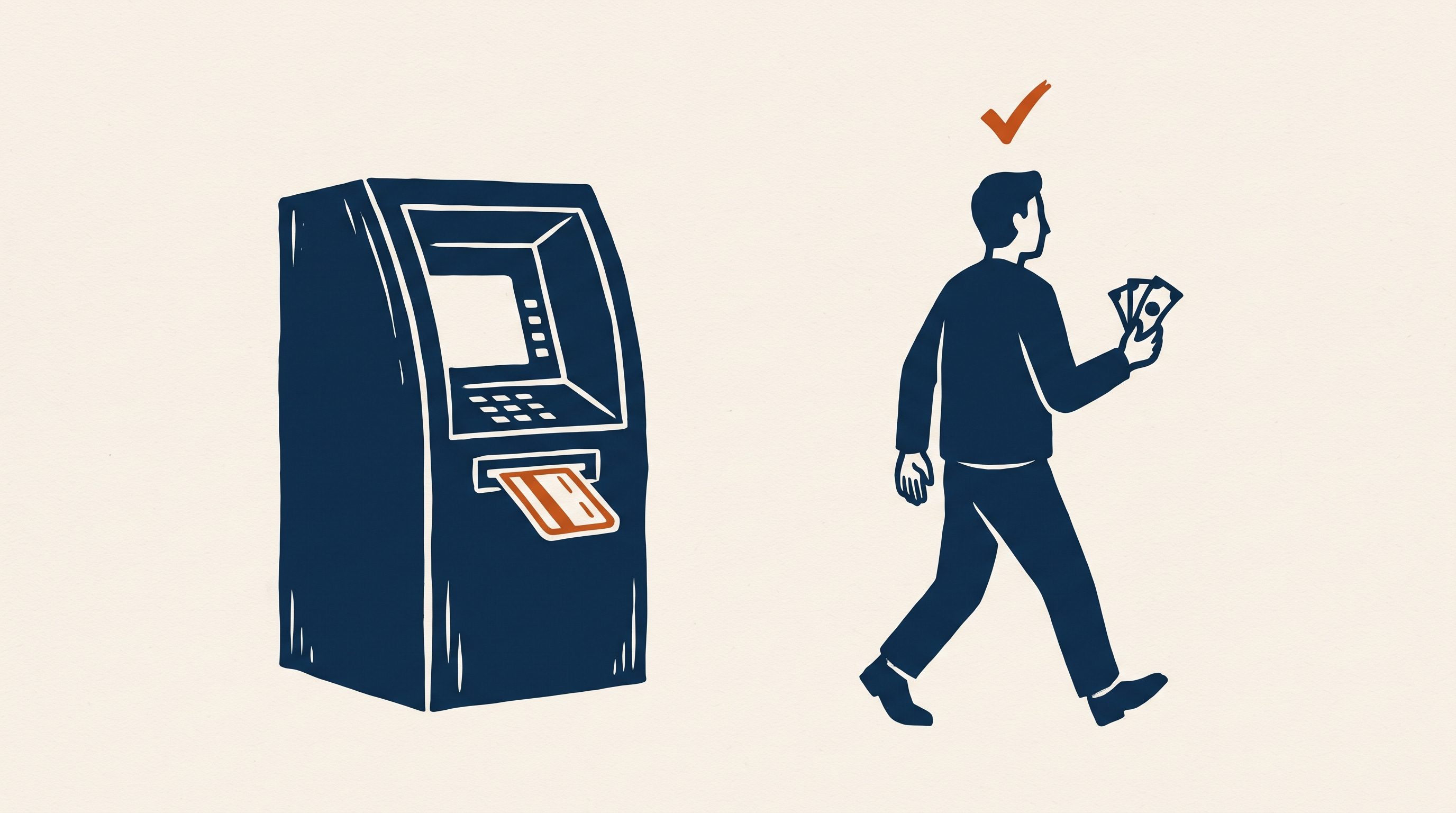
Cognitive scientists have a name for leaving your card in the cash machine: post-completion error. When a task has a cleanup step that comes after the main goal is reached, people reliably skip it, and they skip it most under heavy mental load. The goal is satisfied, so the remaining step loses its grip on attention. You got the cash. The card stays behind.
The same logic holds at organizational scale. Go-live is the cash. Checking, exception handling, and translation are the card. And the people most likely to be holding both are the ones under the heaviest load: middle managers absorbing the change while still running the work.
Leadership Reflection
Endure does not mean tolerate more. It means the residual work gets the same structure the launch got: a named owner, protected time, a review date, and the authority to change the load.

It also completes the protocol this arc has been building. Pace sets the conditions under which stopping is still possible. Attend keeps the human signal visible. Cost makes the residual work countable. Endure assigns that work to someone, so it does not disappear again. Four moves, one sequence.
This week’s companion, The Stewardship Map, puts that sequence on a single page you can fill in with your team.

Reader Question
What are your people still carrying that your project plan already calls complete?
The Research Underneath
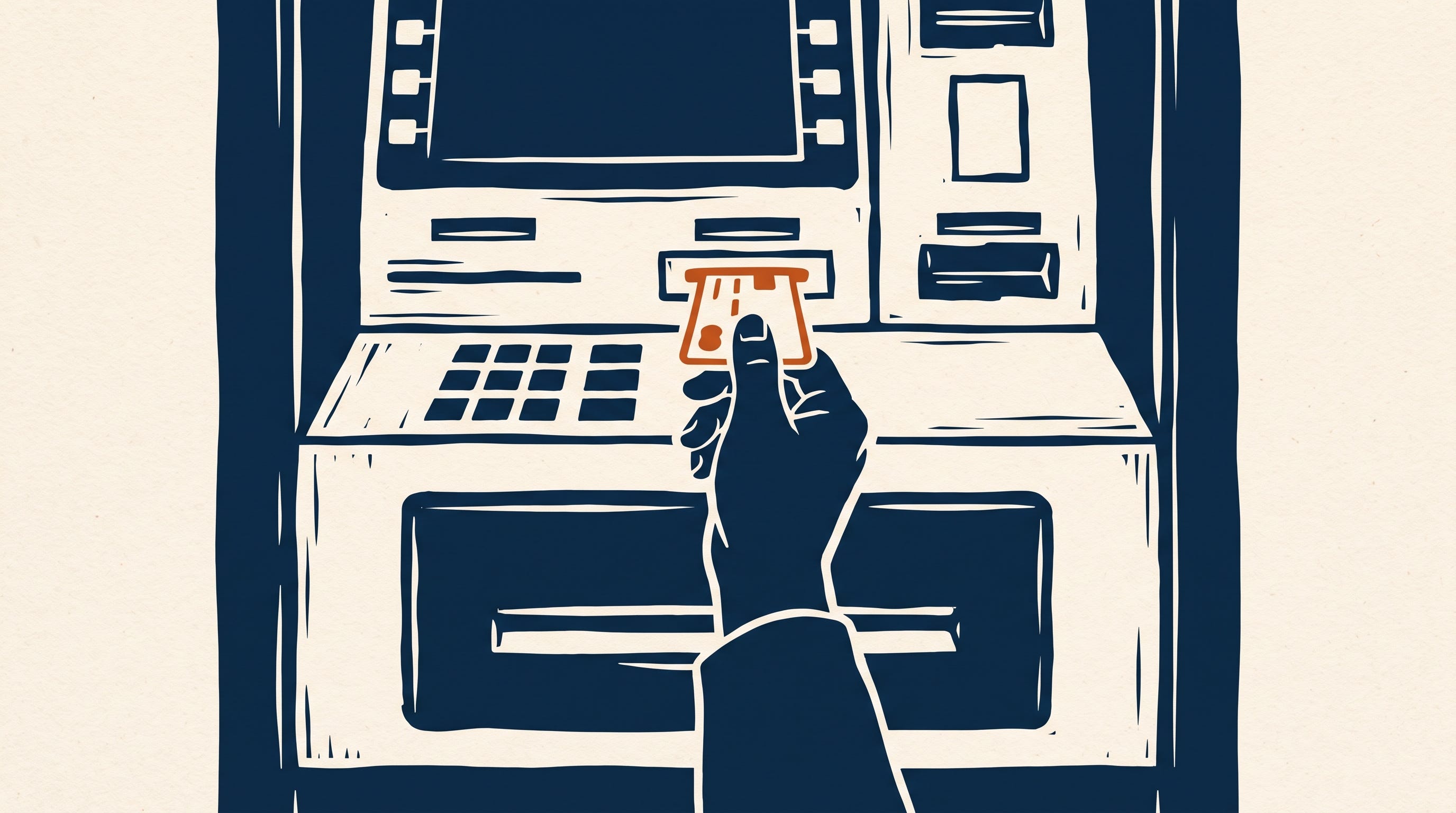
Michael Byrne and Susan Bovair named and modeled the error in 1997. Their working-memory account predicted it would appear when load was high and disappear when load was low, and two experiments, one in the lab and one in a naturalistic setting, confirmed it.
The research that followed adds two findings leaders should keep. First, the error is not a failure of knowledge or care. It persists in people who know the task well and want to get it right. Second, the obvious fixes are weak. Retraining did little, and reminder cues had to be aggressive to work at all. What reliably removed the error was redesigning the task so the cleanup step could not be skipped.
Design thinking calls this a forcing function. The classic example is the cash machine that returns your card before it hands over the money. The cleanup moved ahead of the goal.
For leaders, the implication is plain. Asking people to sustain a change is the weak fix. Building ownership of the residual work into the structure is the strong one.
Further Reading
Books
Norman, D. A. (2013). The design of everyday things (Rev. and expanded ed.). Basic Books.
Reason, J. (1990). Human error. Cambridge University Press.
Shorter Reads
Bain & Company. (2026, January 29). 88% of leaders are confident their reorganization will deliver; only 36% of employees agree [Press release]. https://www.bain.com/es-ar/about/media-center/press-releases/2026/88-of-leaders-are-confident-their-reorganization-will-deliver--only-36-of-employees-agree-bain--co-research/
Byrne, M. D., & Bovair, S. (1997). A working memory model of a common procedural error. Cognitive Science, 21(1), 31–61. https://doi.org/10.1207/s15516709cog2101_2
Li, S. Y. W., Blandford, A., Cairns, P., & Young, R. M. (2008). The effect of interruptions on postcompletion and other procedural errors: An account based on the activation-based goal memory model. Journal of Experimental Psychology: Applied, 14(4), 314–328. https://doi.org/10.1037/a0014397
Malone, E. (2026, September 7). Engagement with AI at work growing, survey finds. The Irish Times. https://www.irishtimes.com/business/work/2026/09/07/engagement-with-ai-at-work-growing-survey-finds/
Theory Meets Tuesday is the weekly edition from Unified Purpose. Smarter leadership for the real world. Replies are read.