


Issue 025 · October 20, 2026
The Decision Moment
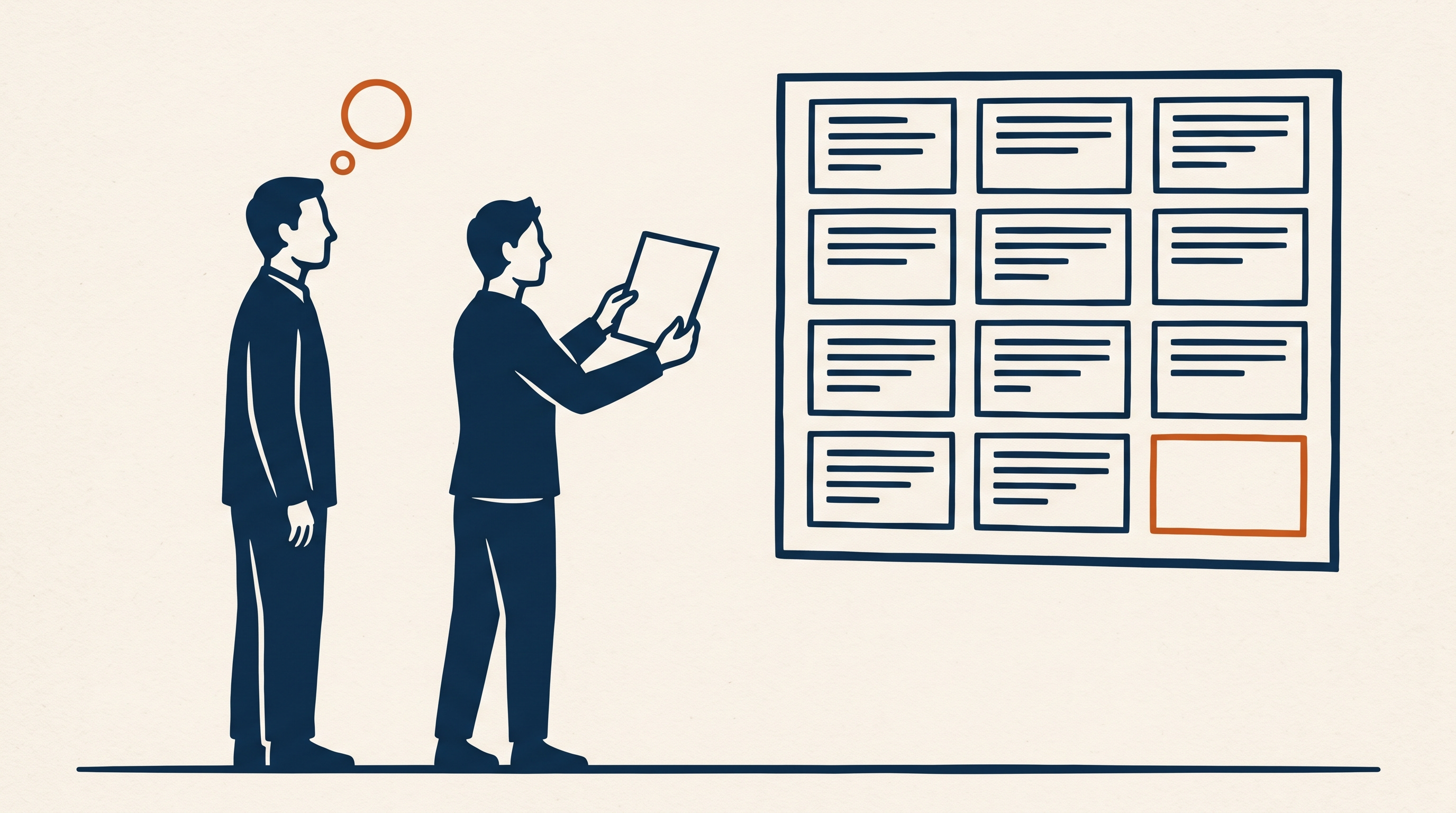
Your planning review is Thursday. Every line on the roadmap has an owner, a metric, and a date. Then one of your strongest people asks for something that fits none of those columns: two weeks to chase a question with no promised deliverable. She cannot tell you what she will find. That, she says, is the point.
You want to say yes. You also know what happens to anything on the roadmap that cannot report progress.
Last week, NPR’s TED Radio Hour asked whether we have forgotten how to play. Psychologist Peter Gray described play as practice in making your own decisions and solving your own problems, and tied its loss to feeling like “a victim of powerful other people and circumstances.” Executives seem to agree in principle. In a LEGOLAND-commissioned survey of 100 CEOs, 79 percent said play improves innovation and culture.
Agreement is not design. Your roadmap is the design.
The Decision Tension
The case for evaluation is real. Resources are finite. Unmeasured work drifts. Asking what something will produce protects your team from busywork and your budget from wishful thinking.
The case for exploration is also real. Some questions cannot be framed until someone has wandered into them. The ideas that change a business rarely arrive with a business case attached.
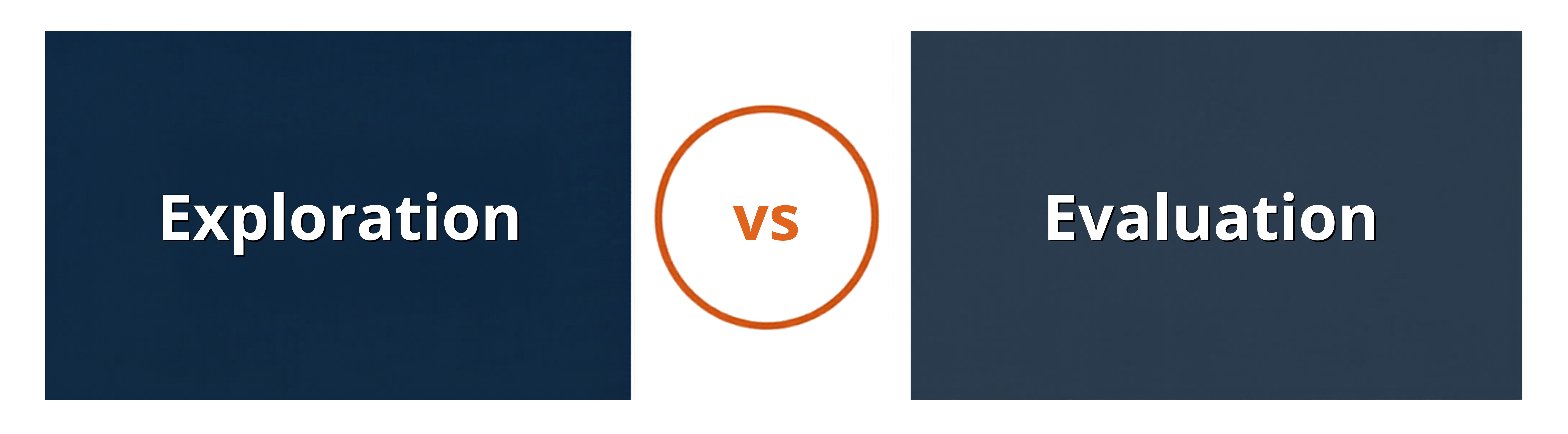
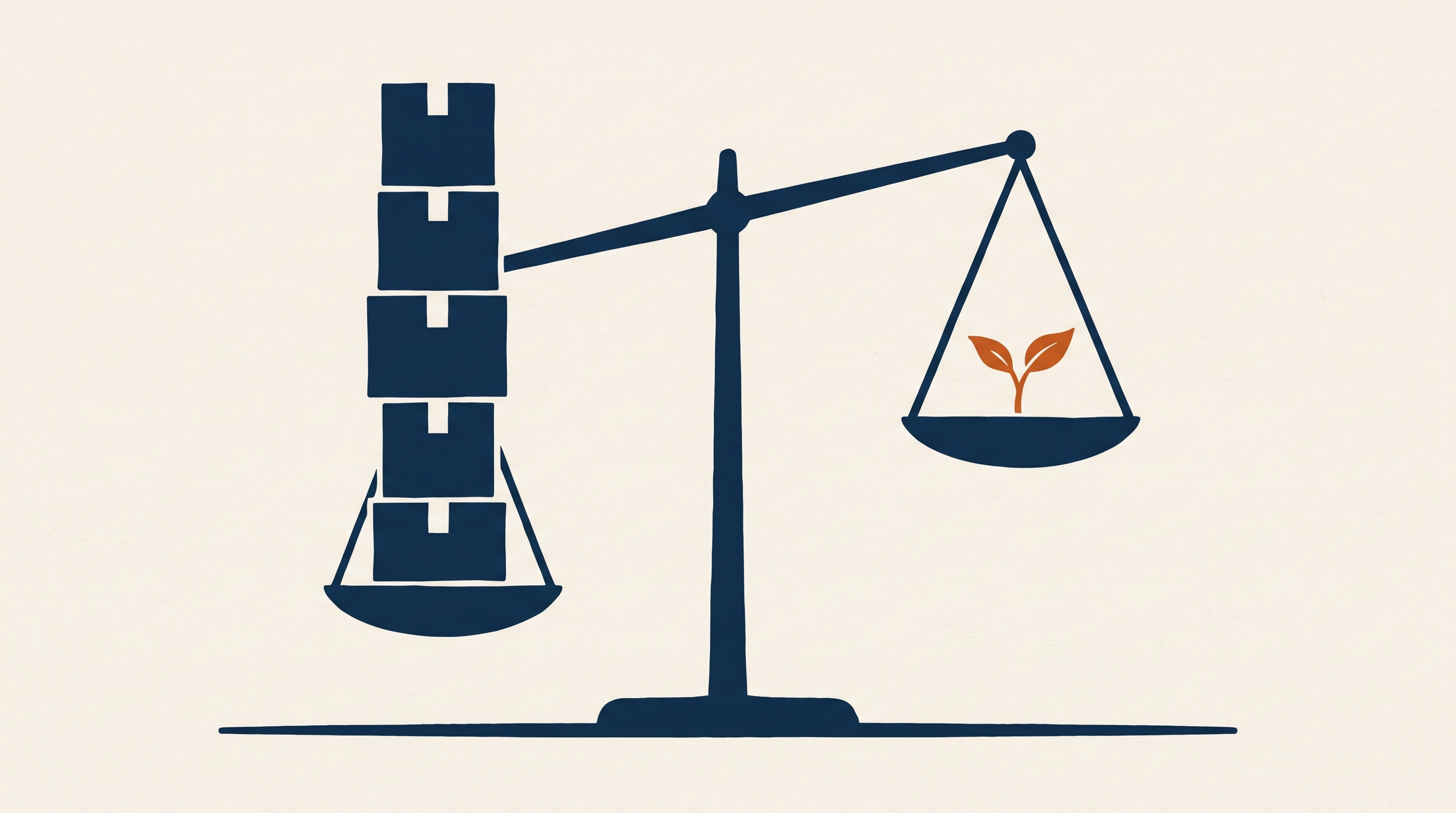
The hard part is sequence, not priority. Ask for proof too early and you never get the discovery. Ask too late and you fund drift. That is the tension: Exploration vs. Evaluation.
The Cognitive Insight
In 1973, Mark Lepper, David Greene, and Richard Nisbett studied preschoolers who already loved to draw. Some were told they would earn a certificate for drawing. Two weeks later, during free time, those children drew about half as much as children who had been promised nothing. Children who received the same certificate as a surprise kept drawing.
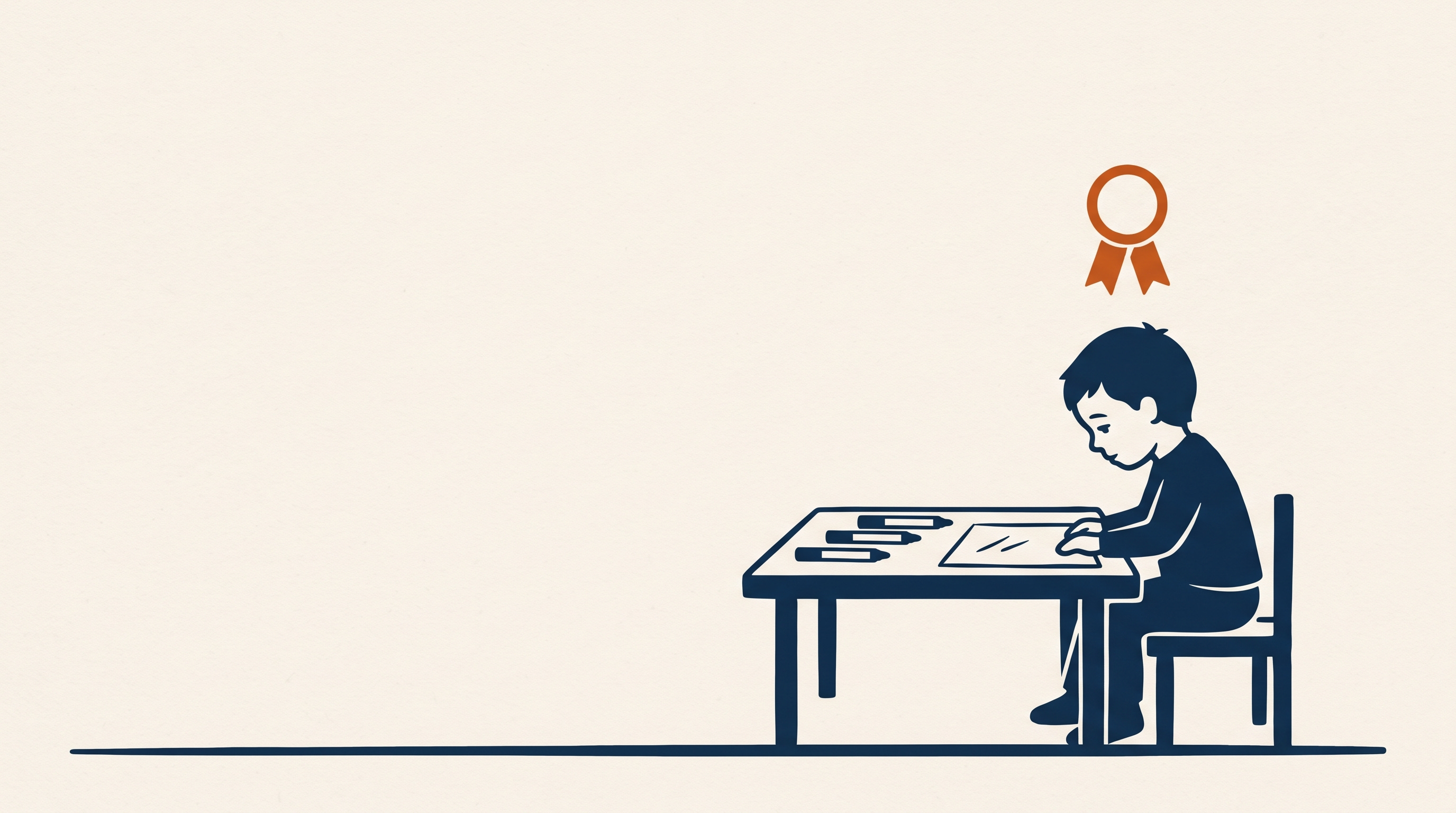
The researchers called it the overjustification effect. When an activity people chose freely becomes the means to an expected, evaluated end, it starts to feel like work, and the interest that fueled it fades.
The reward was not the problem. The expectation was. Once the children drew in order to be judged, drawing changed meaning.
Organizations do this to exploration constantly. We ask for the deliverable before curiosity has done its work, then wonder why people stop bringing us strange ideas.
Leadership Reflection
The decision in front of you is not whether to make room for play. It is when evaluation begins.
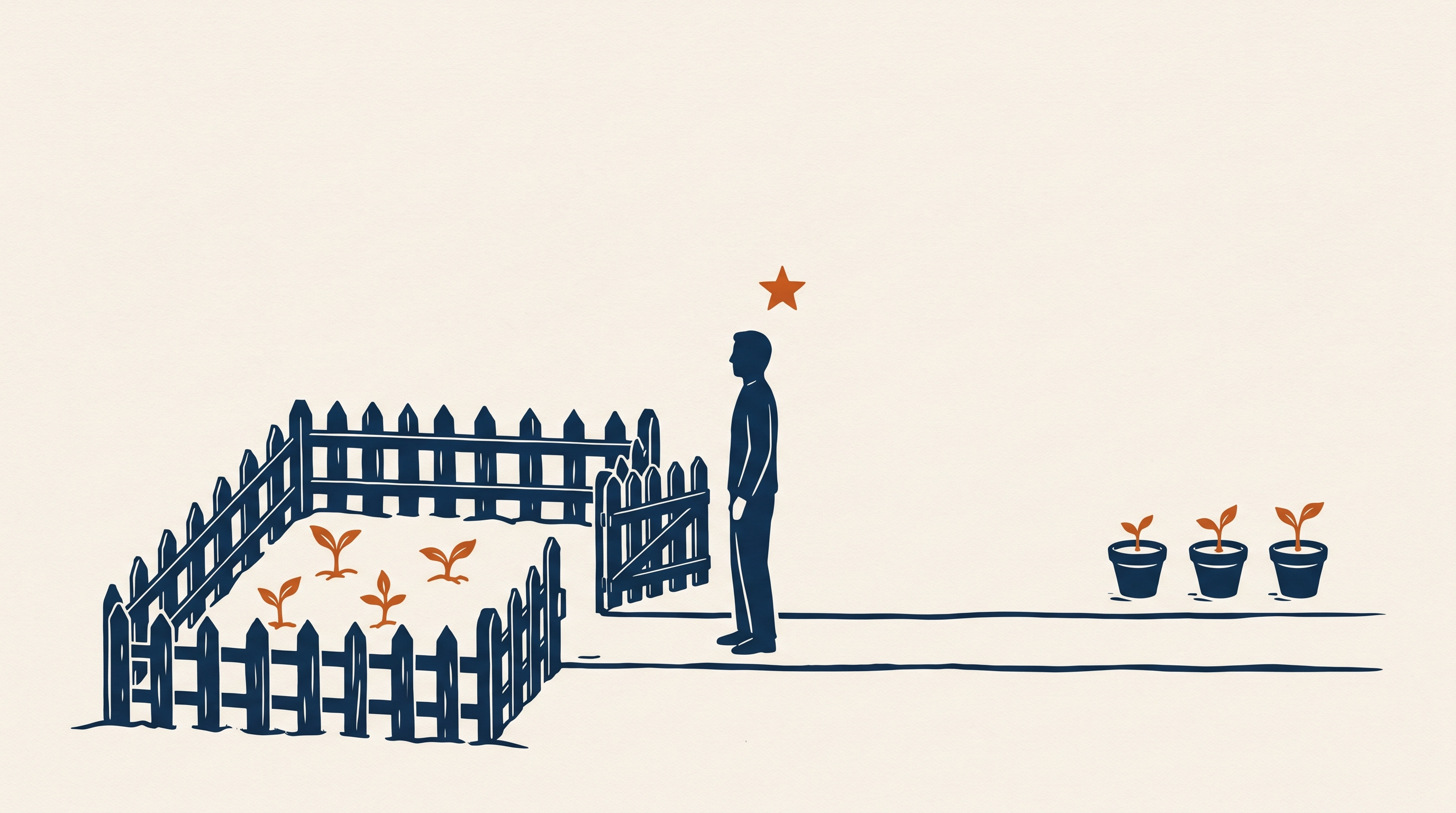
Exploration needs a protected window where nobody has to justify the question yet, followed by a clear moment when a promising idea becomes a bounded trial with real feedback. Skip the window and you get compliance dressed as curiosity. Skip the transition and you get hobbies.
The PACE arc asked what responsible speed requires. This week asks what protected space makes possible.
I put a one-page tool, the Exploration Budget, in a companion post.

Reader Question
Where in your organization does an idea get to exist before someone asks what it will deliver?
The Research Underneath
Lepper and his colleagues explained the effect through self-perception: people read their own motives from their circumstances. With a promised reward in view, “I did it because I wanted to” becomes “I did it for the certificate.” Later work found the effect strongest when rewards are expected and feel controlling, and weakest when they arrive unannounced or carry information rather than pressure. For leaders, the issue is not recognition. It is when evaluation shows up and how it lands.
Workplace research echoes the pattern. A 2026 systematic review of 35 studies by Firoz, Ghosh, and Sharma found that authentically integrated play supports well-being, innovation, and collaboration, while coercively imposed play can breed cynicism and erode trust. The authors call the overall evidence inconclusive. An ethnography by Mukerjee and Metiu (2022) inside one Indian technology firm traced how play built psychological safety through vulnerability and comradeship. One firm, so read it as illustration.
James March (1991) supplies the organizational version: exploitation pays sooner and more surely, so it steadily crowds out exploration, even as that erodes the organization’s future.
The developmental science is stronger than the workplace science. What follows is my translation of it.
Further Reading
Books
Brown, S., & Vaughan, C. (2009). Play: How it shapes the brain, opens the imagination, and invigorates the soul. Avery.
Gray, P. (2013). Free to learn: Why unleashing the instinct to play will make our children happier, more self-reliant, and better students for life. Basic Books.
Shorter Reads
Firoz, M., Ghosh, K., & Sharma, D. (2026). From games to gains: A systematic literature review on play at work. Management and Labour Studies, 51(1), 89–115. https://doi.org/10.1177/0258042X251399238
Lepper, M. R., Greene, D., & Nisbett, R. E. (1973). Undermining children’s intrinsic interest with extrinsic reward: A test of the “overjustification” hypothesis. Journal of Personality and Social Psychology, 28(1), 129–137. https://doi.org/10.1037/h0035519
March, J. G. (1991). Exploration and exploitation in organizational learning. Organization Science, 2(1), 71–87. https://doi.org/10.1287/orsc.2.1.71
Mukerjee, J., & Metiu, A. (2022). Play and psychological safety: An ethnography of innovative work. Journal of Product Innovation Management, 39(3), 394–418. https://doi.org/10.1111/jpim.12598
Theory Meets Tuesday is the weekly edition from Unified Purpose. Smarter leadership for the real world. Replies are read.