


Issue 013 · July 19, 2026
The Decision Moment
Your team is well informed. Maybe too well. Customers, board members, dashboards, frontline managers, competitors, internal reports: every channel is open, and every channel is producing. Each week arrives with a new "most important" thing, and each one is defensible on its own terms. Nobody is hiding information from you. That is not the problem. The problem is quieter. People are working hard, but you can feel the alignment loosening, because the team can no longer tell you which of the twelve priorities is the priority. By Thursday, whatever was loudest on Monday has been replaced by whatever is loudest now.
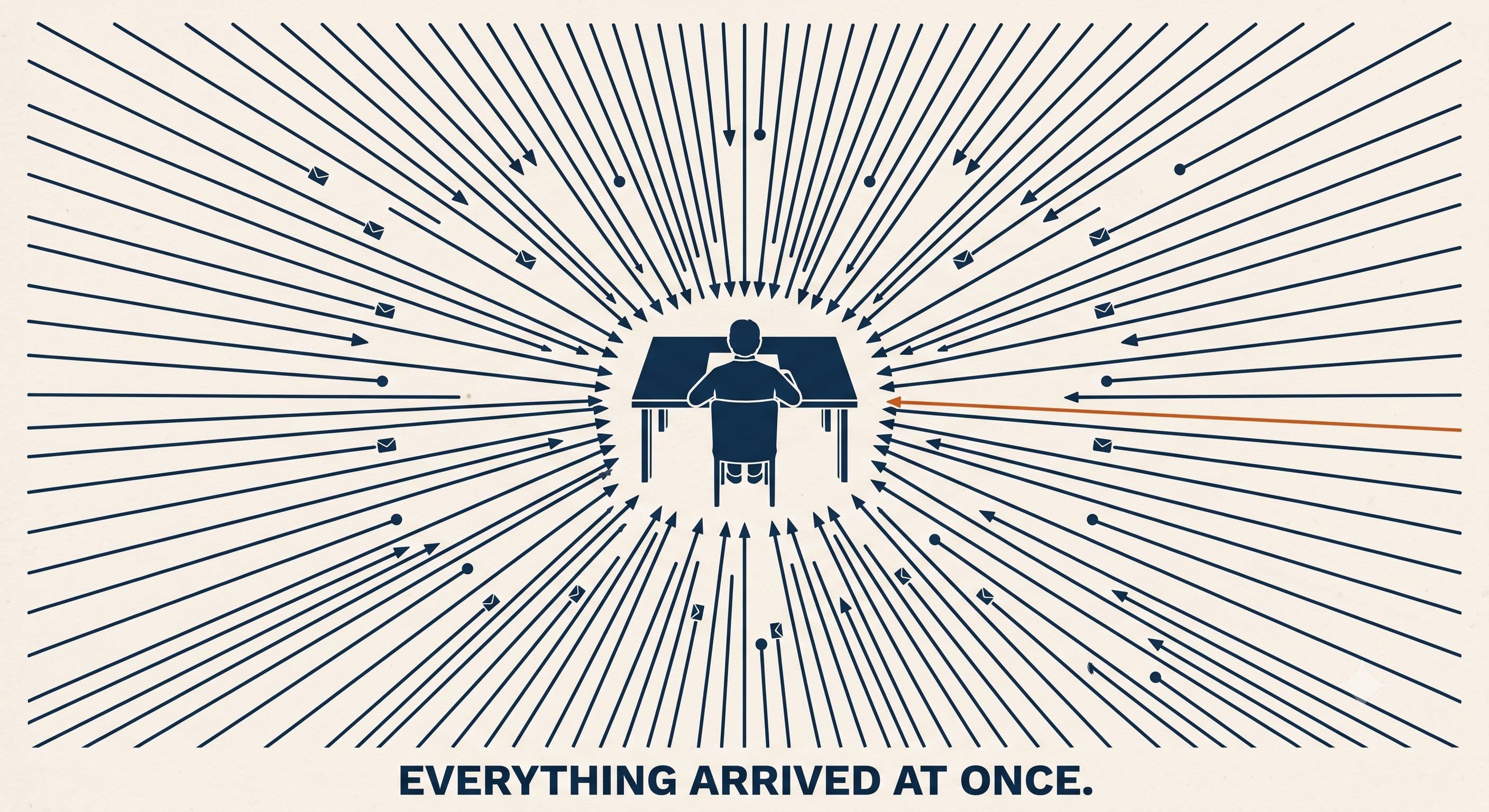
The Decision Tension
Part of you knows that staying open is a strength. A leader who stops listening goes blind, misses the early warning, hardens into the person who was right once and never updated again. So you keep the aperture wide. But the wider it opens, the harder it becomes for anyone below you to know where to point. Every new input you take seriously becomes, by implication, something the team now has to carry. Stay maximally responsive and you slowly lose the ability to hold a direction. Hold direction too tightly and you risk missing the signal that should have changed it. That is the bind: responsiveness versus direction.
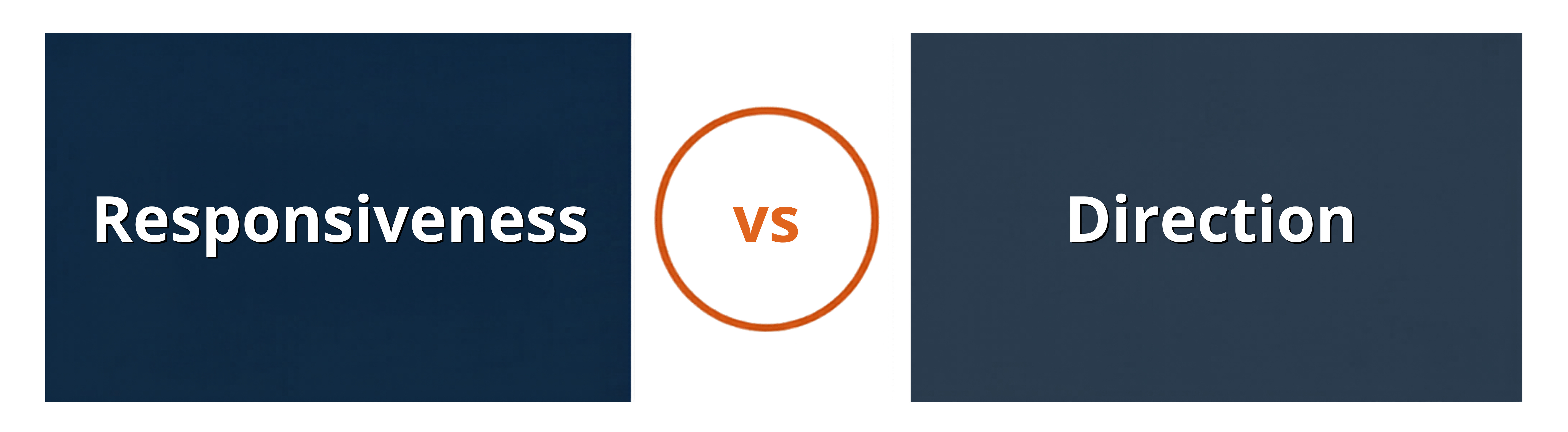
The Cognitive Insight
Here is the part that is easy to miss. The scarce resource in your organization is not information. You have more of that than you can use. The scarce resource is attention, and every input you admit spends some of it. When you treat "stay informed" as an unlimited good, you are quietly overspending the one budget with a hard ceiling. The team feels the overdraft before you do. They ration attention the only way an overloaded system can: by defaulting to whatever is most recent, most urgent, or most loudly delivered. That is how noise starts wearing the costume of signal.

Leadership Reflection
The reframe is small and it changes the whole task. Stop asking whether an input is useful. Almost everything is useful. Start asking whether it earns a place in the team's limited attention this week, at the cost of something else that would otherwise hold it. That question forces a hierarchy, and hierarchy is the first thing overload destroys.

If you do not build the filter, your team will build one for you, and they will build it out of urgency rather than judgment, because urgency is the only sorting rule available to someone handed everything at once. Designing the input system is not a way to hear less. It is how you make sure the few things that should move the work are the ones that actually reach it.
Reader Question
Which inputs are you allowing to become priorities without a decision gate?

The Research Underneath
In 1971, the economist and Nobel laureate Herbert Simon named this precisely. Writing about how to design organizations for a world already saturated with information, he observed that a wealth of information creates a poverty of attention. Information, he pointed out, consumes something, and what it consumes is the attention of whoever receives it. So an information-rich world is, by definition, an attention-poor one, and the real design task becomes allocating that attention well rather than maximizing the flow of information into it.
Simon drew a conclusion most organizations still resist. A new source of information only helps if it condenses more than it adds; a well-designed information system, in his framing, should listen and think more than it speaks. Read that way, the leader’s job is not to absorb the inputs. It is to design the system that decides which inputs get through.
Two related lines of work extend the point. William Ocasio’s attention-based view of the firm argues that what a company actually does is a product of how it channels the attention of its decision-makers. Strategy, in this view, is less a document than a pattern of what the organization chooses to notice. Separately, Eppler and Mengis, reviewing three decades of research, found that information overload does not merely tire people out. Past a threshold it degrades the quality of the decisions they make, which is exactly the failure the loudest-input default produces.
Further Reading
Books
Simon, H. A. (1971). Designing organizations for an information-rich world. In M. Greenberger (Ed.), Computers, communications, and the public interest (pp. 37–72). Johns Hopkins Press.
Newport, C. (2021). A world without email: Reimagining work in an age of communication overload. Portfolio.
Shorter Reads
Ocasio, W. (1997). Towards an attention-based view of the firm. Strategic Management Journal, 18(S1), 187–206. https://doi.org/10.1002/(SICI)1097-0266(199707)18:1+<187::AID-SMJ936>3.0.CO;2-K
Eppler, M. J., & Mengis, J. (2004). The concept of information overload: A review of literature from organization science, accounting, marketing, MIS, and related disciplines. The Information Society, 20(5), 325–344. https://doi.org/10.1080/01972240490507974
Theory Meets Tuesday is the weekly edition from Unified Purpose. Smarter leadership for the real world. Replies are read.