
When Signals Become Boxes
The signal you stopped questioning.


Issue 010 · July 7, 2026
The Decision Moment
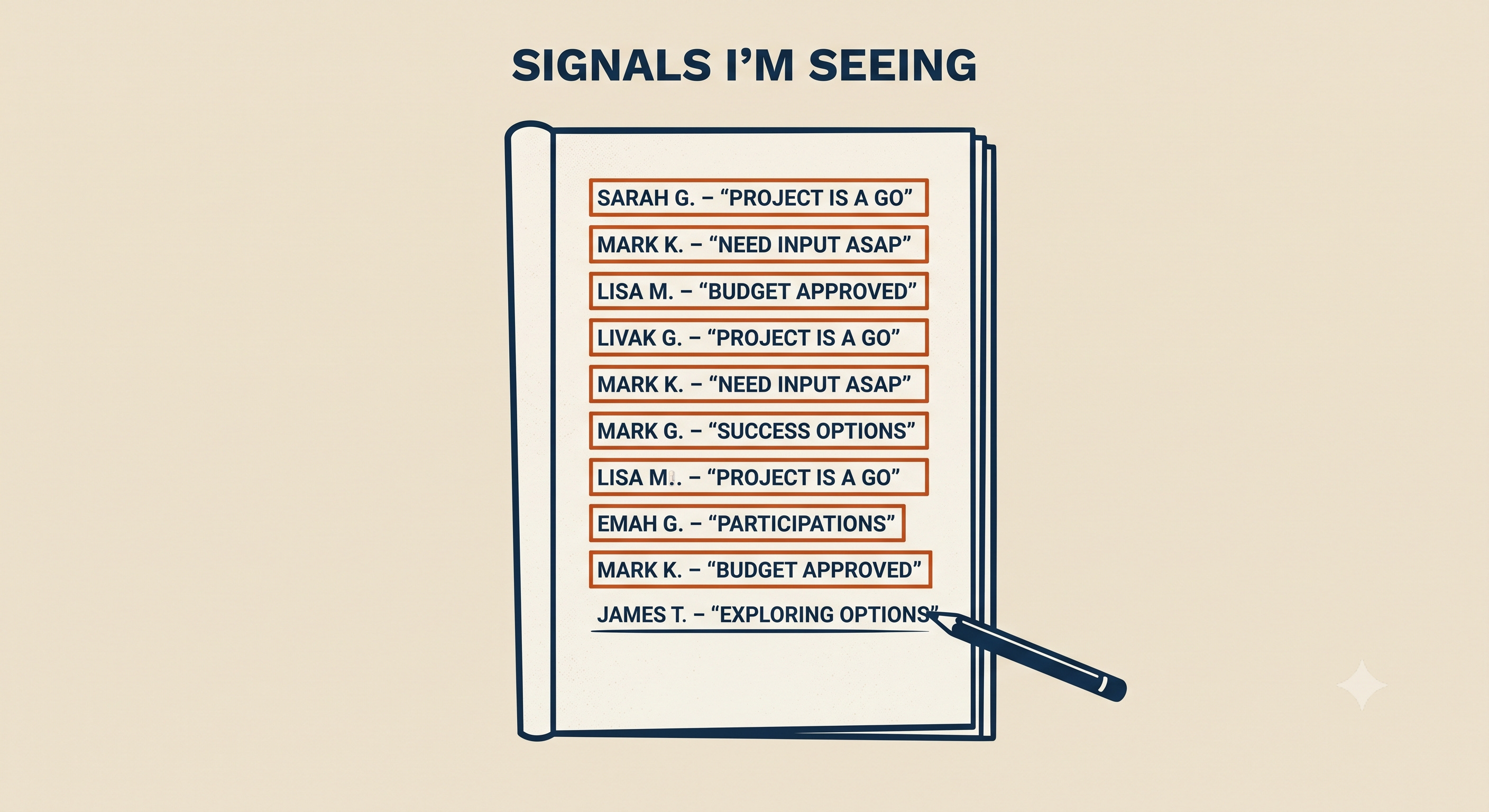
You are sitting in calibration. Promotion slate, mid-year review, the exact meeting does not matter. In front of you is a column you titled “signals I’m seeing.” Next to each name, a phrase. She’s a change agent. He’s not really strategic. They’re a safe pair of hands.
You wrote those to be fair. Tracking patterns over time, using the same language as your peers, is how you keep talent decisions honest instead of political. But rereading the list, something snags. One of your reports does not fit any phrase cleanly, and you can feel the pull to place them anyway, to give them a box so the meeting can move.
Then someone says it, easily, the way people say things everyone already believes: “We know who the high potentials are.” You nod. And a small part of you is uneasy without quite being able to say why.
The Decision Tension
The unease is worth naming, because it is not confusion. It is two legitimate needs pulling against each other.
You need categories. Complex people, a dozen of them, decisions with real stakes: you cannot hold all of that without compression. A clean map of your team is not laziness. It is how you function at the speed the job demands.
And you do not want those categories to quietly decide how much a person is allowed to become. The map is useful right up until you mistake it for the territory. The comfort of a settled read sits against the honesty of admitting you might not know someone as well as your notes suggest.
Call it certainty versus curiosity. Both are doing real work. The problem is that one of them is louder.
The Cognitive Insight
Here is the mechanism underneath it. Your brain sorts people into categories automatically, before you choose to. It is fast, efficient, and mostly invisible, which is exactly why it is worth watching in high-stakes calls.
The trouble is not the sorting. It is what happens next. Once you have named someone “not strategic,” the category starts recruiting evidence for itself. Their operational wins read as proof of the label. The one genuinely strategic move they make gets filed as luck, or a one-off, or someone else’s idea. The category does not just describe what you see. It edits it.

So a signal, which started as your best current guess about a pattern, hardens into a verdict you have stopped examining. A label is just a conclusion you quit questioning. It feels like knowledge. It is actually a story you told once and never reopened.
Leadership Reflection
BeThe move is not to stop categorizing. You cannot, and pretending otherwise only drives the labels underground. The discipline is to hold them loosely enough that new data still has somewhere to land.
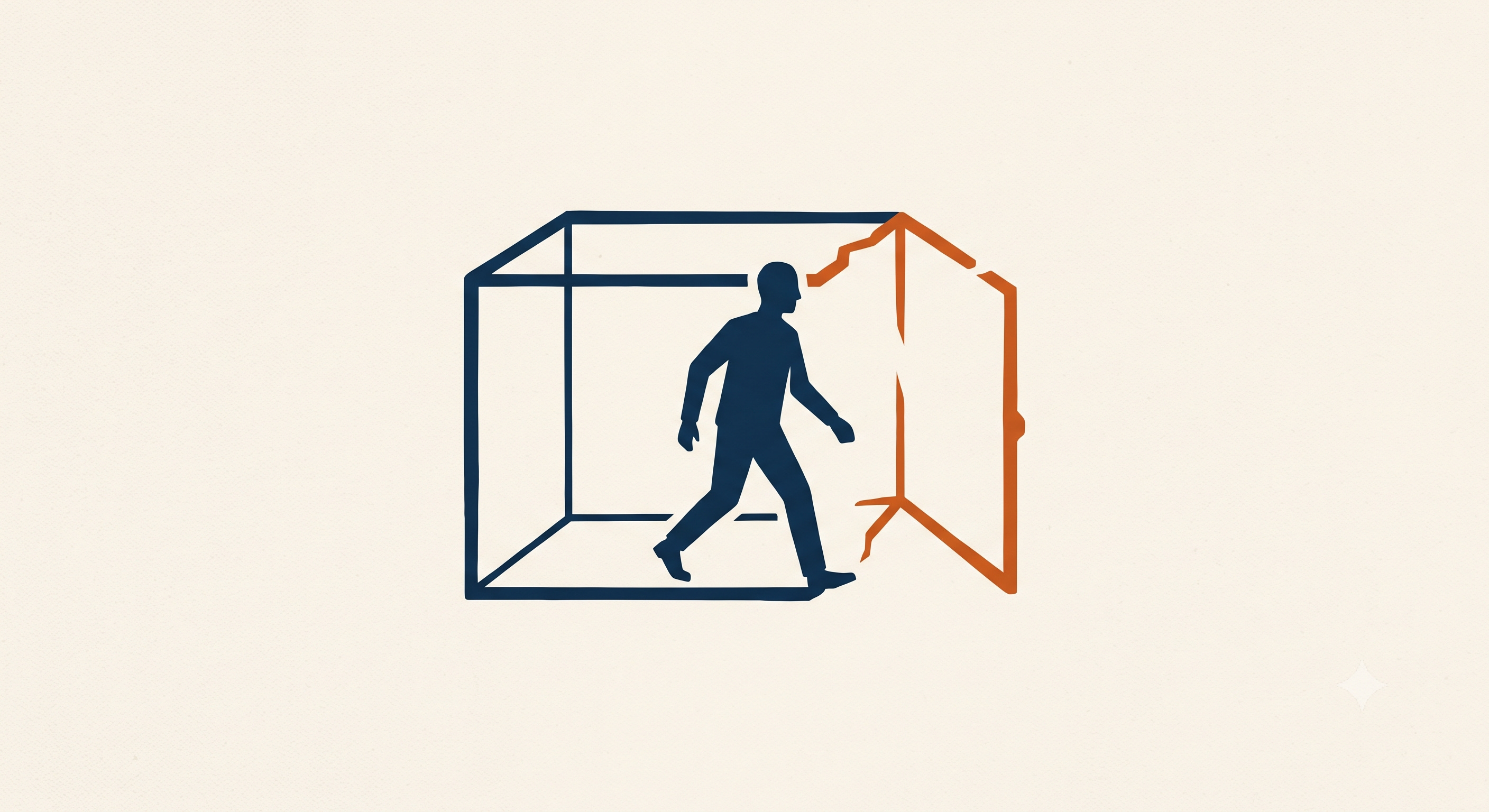
A few ways to keep a label honest:
Treat each one as a hypothesis you occasionally try to disprove. Ask when you first formed the view, and what you have actually seen in the last ninety days that supports or challenges it.
Go looking for the counter-signal. Once per person, deliberately find a moment they acted outside your box. If you cannot find one, that is information about how closely you have been watching.
Audit your language. “She is an operator” is a verdict. “I have been seeing a lot of operational strength from her lately” is an observation. The second sentence keeps a door open that the first one quietly closes.
Notice where you observed them. The context you happened to see someone in shapes the signal you recorded. Who gets read as “strategic” and who gets read as “reliable” is rarely distributed as evenly as the labels imply.
None of this slows the meeting much. It just keeps the map from replacing the person.
Reader Question
Which label on your team are you most afraid of being wrong about?

Theory Reference
Psychologists call this social categorization, and it is older and more ordinary than it sounds. Gordon Allport made the foundational point in 1954: the mind has to think with the help of categories, because orderly life would be impossible if we met every person as a wholly new problem. Categorizing is not a defect. It is what lets you function. The trouble starts only when a category stops updating.
The mechanism of that trouble has been mapped closely since. In their review of categorical social perception, C. N. Macrae and G. V. Bodenhausen describe how, once a category is activated, it shapes what a perceiver notices, how ambiguous behavior gets interpreted, and what tends to be remembered afterward. The label does not sit passively beside the person. It goes to work on the incoming evidence. That is the Macrae and Bodenhausen review in the further reading below.
For a leader, the useful implication is small and practical. The danger is not that you categorize. It is that categories are self-confirming by default, and career decisions run straight through them. Keeping a signal in the “working hypothesis” column, rather than promoting it to fact, is one of the few dependable ways to interrupt that loop before it quietly sets a trajectory for someone.
Further reading
Books
Allport, G. W. (1954). The nature of prejudice. Addison-Wesley.
Banaji, M. R., & Greenwald, A. G. (2013). Blindspot: Hidden biases of good people. Delacorte Press.
Kahneman, D. (2011). Thinking, fast and slow. Farrar, Straus and Giroux.
Shorter Reads
Macrae, C. N., & Bodenhausen, G. V. (2000). Social cognition: Thinking categorically about others. Annual Review of Psychology, 51, 93–120. https://doi.org/10.1146/annurev.psych.51.1.93
Manzoni, J.-F., & Barsoux, J.-L. (1998). The set-up-to-fail syndrome. Harvard Business Review, 76(2), 101–113.
Theory Meets Tuesday is the weekly edition from Unified Purpose. Smarter leadership for the real world. Replies are read.